
Science skills
Experiment Variables: Build a Fair Test
Identify experiment variables, plan a fair paper-helicopter test and record honest results with a free paper worksheet.

You have a science question, a page of instructions and three boxes labelled independent, dependent and controlled variables. Filling those boxes is easier when you describe the actual test first. Experiment variables are roles in a particular investigation. A measurement such as time can play one role in one question and a different role in another.
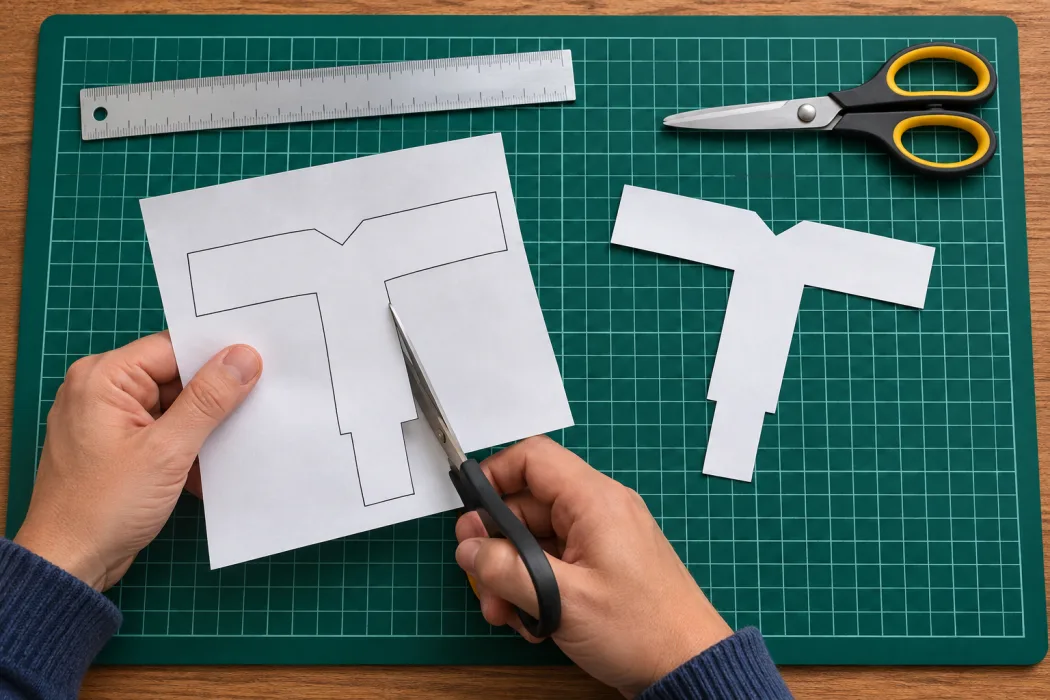
This guide uses a paper helicopter to turn the labels into decisions you can carry out. You can plan the investigation with spare paper, a ruler and a way to time a fall. Follow your teacher’s instructions for any practical activity, use a clear low drop area, and keep people away from the falling model. No app or purchased experiment kit is needed.
Experiment variables begin with a measurable question
Start with a question you could answer using a record sheet. “Which helicopter is best?” leaves too much undecided. Best might mean longest flight, straightest flight or least damage. Try “How does blade length affect the time a paper helicopter takes to fall from a fixed height?” Now you have named something to change and something to measure.
Define blade length before cutting. For example, decide that it is measured from the fold where a blade meets the body to its tip. Make a simple sketch of that distance. If another person measures from the center line instead, you could end up comparing different designs even though both of you wrote the same length. Include the definition in the method.
Choose feasible blade lengths that fit your teacher’s template. A shorter blade should not accidentally come from a different paper type or a smaller overall body. If changing the length necessarily changes another property, acknowledge the connection. You can compare whole designs, but your conclusion must then refer to those designs rather than claiming that you isolated just one physical effect.
Separate the change from the response
The independent variable is the factor you deliberately vary in this investigation. Here it is blade length. Write the unit beside it, such as centimeters. The dependent variable is the response you measure, here fall time in seconds. Say what starts and stops the timer. One workable definition is the interval between release and the first touch of the floor.
Controlled variables are conditions you aim to keep consistent so that they do not provide an alternative explanation for differences. Here they include release height, paper type, body shape, added clips if any, release method and location. A list is a start, but each item needs a practical rule. “Same height” becomes more useful when you specify what part of the model begins at the height mark.
The Science Buddies explanation of experiment variables distinguishes the factor changed, the response measured and conditions held consistent. Use those roles to check your own question. Avoid choosing a variable by memorizing where a word appears in a sentence. Ask what the investigator actually changes and records.
Turn each control into an instruction
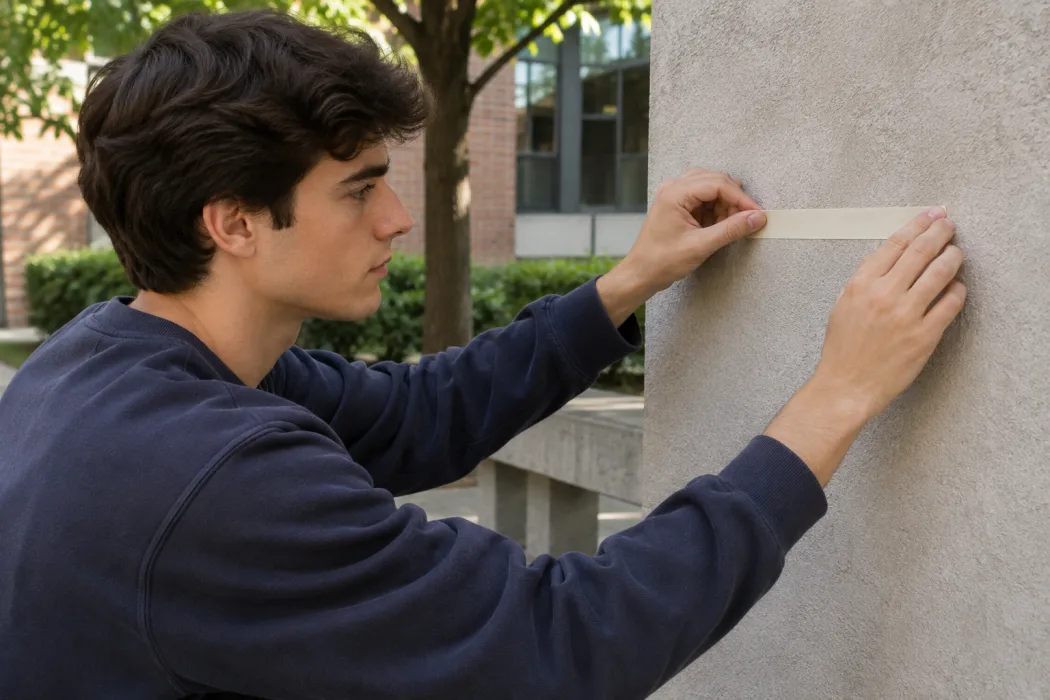
Mark the release height on a wall with permission, using a removable strip of tape. Decide whether the blade fold or another identifiable part of the helicopter lines up with it. Hold the model still and release without throwing it. If one person flicks a blade and another simply lets go, the starting conditions differ even when the height mark is shared.
Choose a sheltered location and keep the landing area clear. A breeze can alter a fall, so record a draft or unexpected disturbance rather than quietly treating it as normal. Keep the paper and template the same for all models. If a blade becomes bent after repeated drops, note the damage and follow a rule agreed before testing about repairing or replacing the model.
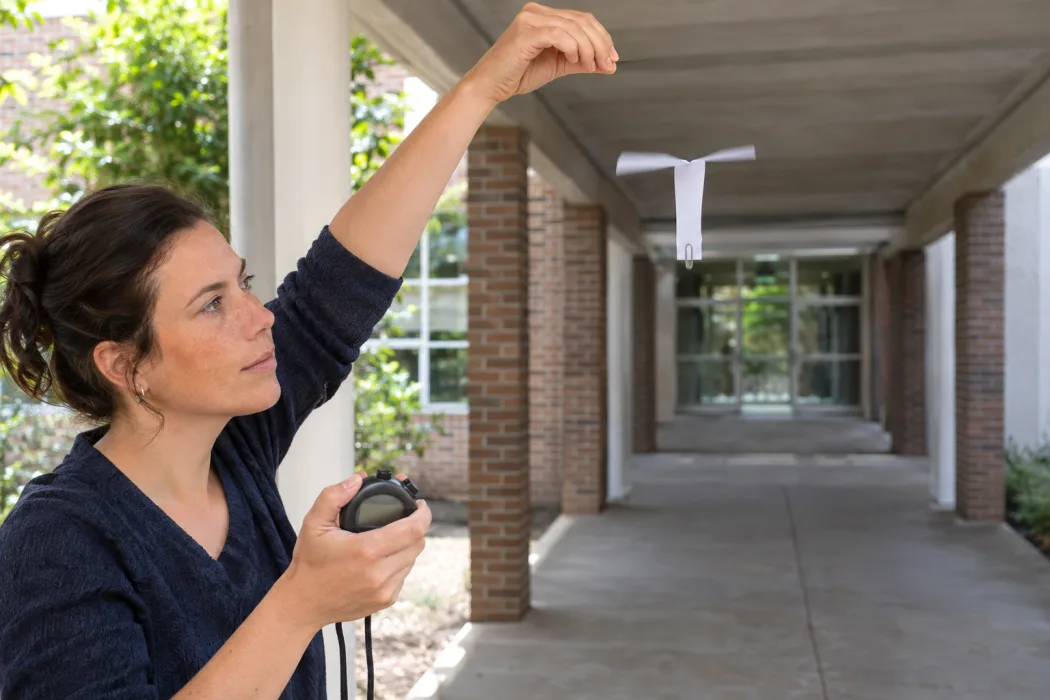
Use the same timing definition throughout. A human-operated stopwatch adds reaction delay, which can matter for a short fall. Repeating trials gives you information about variation, but it does not automatically remove a consistent late start. Explain this limitation in your report. If your teacher supplies a timing method, follow it and describe it precisely enough for someone else to repeat.
Distinguish a comparison condition from a controlled variable
The word “control” can refer to a comparison condition as well as conditions held steady. A baseline helicopter with the original template may be your comparison design. Blade length can still vary across designs, while paper type and release height remain controlled variables. A baseline is a thing or condition you compare against. A controlled variable is a condition you try to hold consistent.
Do not add a “no helicopter” trial just because a worksheet asks about a control. It would not produce a fall time for the same kind of object. Explain what comparison makes sense for your question. Some school investigations compare several values of a factor without needing an untreated group. Others, such as a treatment study, use a distinct untreated or reference condition.
Check the wording your teacher uses and state your meaning explicitly. You could write “The original blade length is the reference design. Release height is kept constant in every trial.” Those sentences show the difference without relying on the same word twice. If a worksheet uses a different convention, keep the investigation clear and ask your teacher which label they expect.
Plan repeats and the order before collecting data
Choose a manageable number of repeated trials for each design, following the assignment. Repeats let you see whether times cluster closely or vary widely. If you make only one drop for each blade length, a slip at release can dominate the comparison. Keep each trial’s value rather than recording only the average. You may need the individual values to understand an unusual result.
Consider alternating the design order or choosing the order randomly. If you always test the shortest blades first, practice with the stopwatch could be mixed up with blade length. Paper damage or a changing breeze could also follow time order. Changing the order reduces some of these concerns, while careful notes help you notice what still happened.
Agree on the rule for an interrupted trial before starting. If a helicopter hits the wall, record that event and follow the stated repeat rule. Do not delete an inconvenient value merely because it does not fit your prediction. A valid unusual result belongs in the record. A documented procedural failure can be handled using the rule, with the original observation preserved.
Build a table that keeps observations separate from conclusions
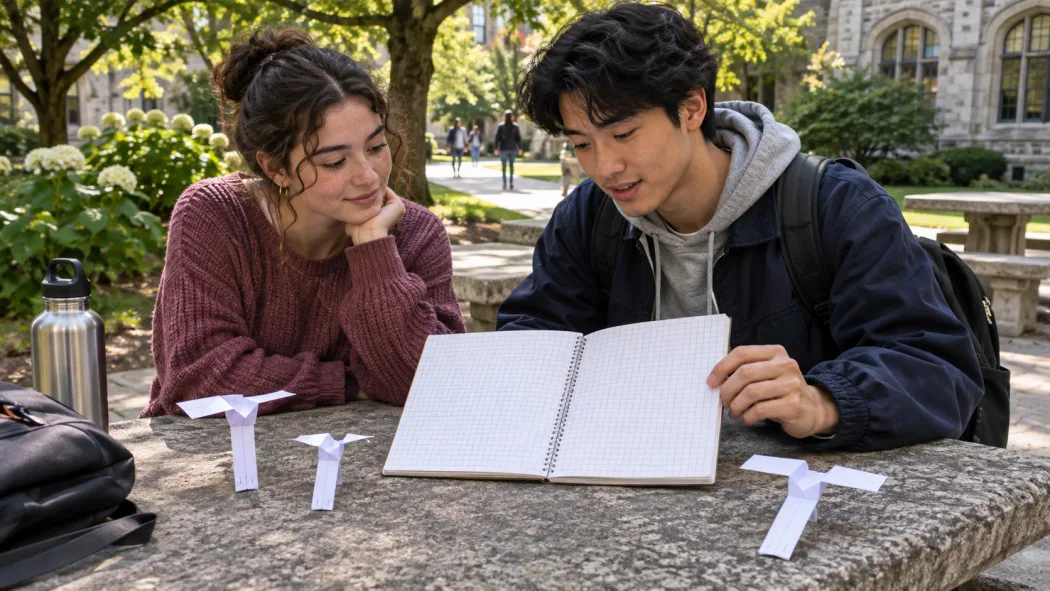
Prepare headings for blade length, trial number, fall time and notes. Put units in the headings. Leave space for the actual measurements and avoid filling it with predicted values. Predictions belong in a separate sentence before the investigation. You can draw the table for free on spare paper and copy the template for another task.
After measuring, calculate a summary only if it suits the assignment. An average can help compare repeated fall times, but look at the spread as well. If one design’s times vary widely, say so. A small difference between averages is harder to interpret when it is smaller than the variation between individual drops. Do not claim certainty from a neat-looking table.
The guide to plotting science graphs explains how to choose axes and a scale. Choose another practice topic from the guide archive after you can explain the table. When drawing your own graph, put the factor varied on the horizontal axis and fall time on the vertical axis. Label the units and explain whether a plotted point represents one trial or a summary.
Write a conclusion that matches the test you ran
Begin with the observed comparison, using your recorded measurements. State whether the tested designs showed longer, shorter or similar fall times under your conditions. If results are inconsistent, describe the inconsistency. You can report what happened without deciding that every experiment must produce a clear trend. Never invent measurements to complete a prediction.
Then connect the evidence to the question and identify a specific limitation. A possible limitation is inconsistent release height or timing delay. Explain how it could affect the comparison. “Human error” is too broad to guide improvement. A better sentence names the step and a practical change, such as aligning a marked fold with the height line before every release.
Your conclusion should stay within the tested designs and conditions. You have not established that a particular blade length is best for every paper helicopter. If blade width or overall mass also changed, include that qualification. An observation can support a narrower claim and still be a useful result. The next investigation can isolate a different factor rather than stretching the current conclusion.
Transfer the method to a new school question
Imagine a second investigation about a toy car rolling down a ramp. If you vary ramp height and record distance traveled after leaving it, ramp height is the independent variable and travel distance is the dependent variable. Keep the car, surface, release method and distance definition consistent. Decide where the distance begins and ends before the first run.
Now change the question. If you hold ramp height fixed and compare different surfaces, surface type becomes the independent variable. The same object or measurement can change roles when the question changes. Write a sentence beginning “I change…” and another beginning “I measure…” before filling in any labels. Then write how you keep the main alternative influences consistent.
If you use AI to review the plan, compare its suggestions with your method and school rules. AI can misread a task or propose a poor control. Lirno cannot guarantee correctness, grades, mastery or permission to use assistance. Your paper plan should stand on its own. Before submitting, check that another student could follow your change, measurement, controls and repeat rule without guessing.