
History homework
Political cartoon analysis with AI: evidence first
Learn to describe a historical cartoon, test its symbols and context, and use an AI tutor without letting it invent the interpretation.
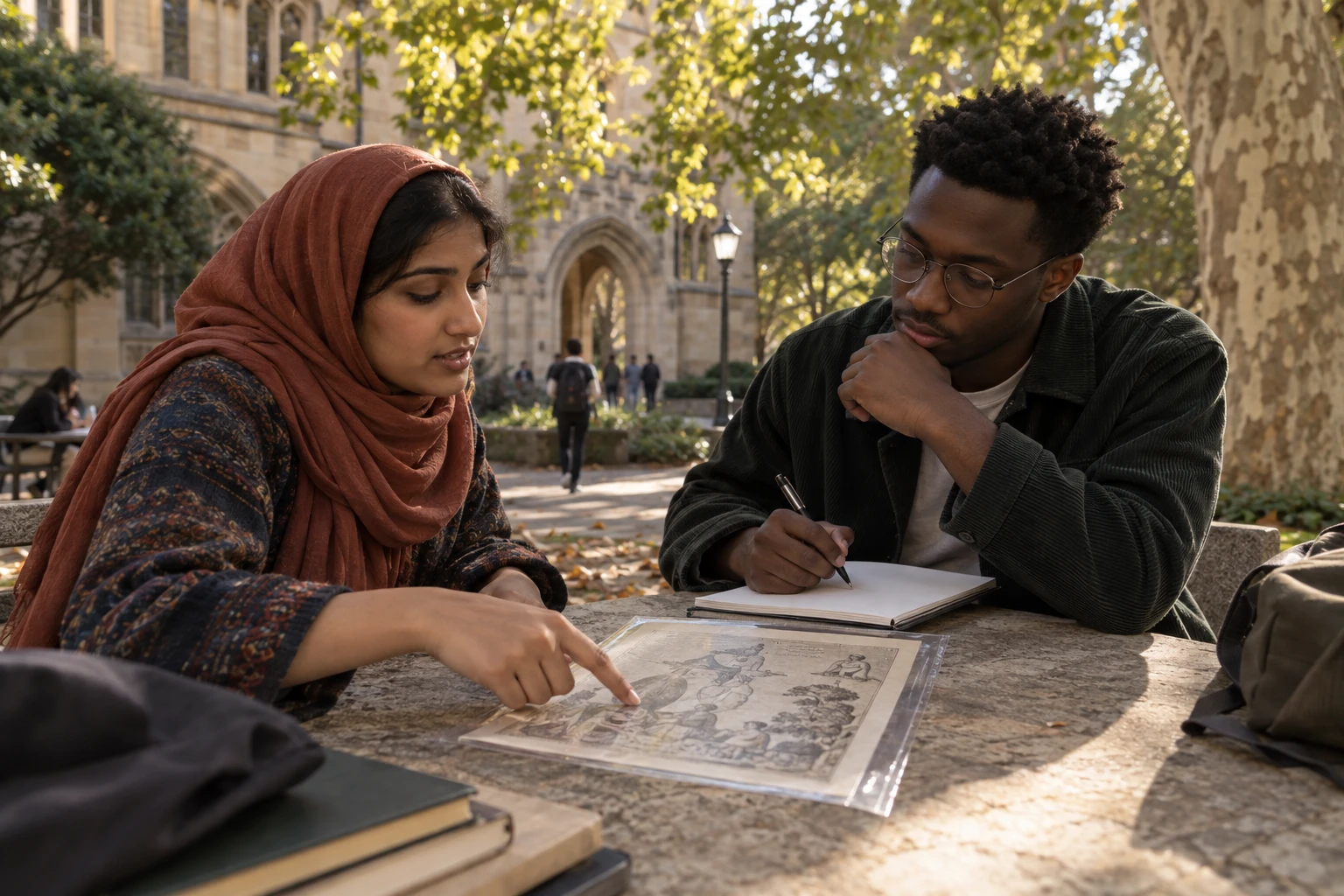
Political cartoon analysis can feel like guessing what a strange drawing is supposed to mean. Your history worksheet shows a crowded cartoon, but the caption is tiny, the figures are exaggerated, and the question asks what the artist thought about an event. A fluent AI interpretation is tempting here. The problem is that it may confidently identify the wrong person, miss a printed date, or invent a symbol that is not actually present.
A more reliable approach begins with what you can see, then asks what those details might suggest, and only then checks the time and audience. Lirno can help you inspect a complete photo, clarify an unfamiliar technique, or challenge a tentative interpretation. Your own observations, course material, and source checks remain the evidence. This guide walks through a real cartoon assignment from first look to a defensible paragraph and a short practice question.
1. Start political cartoon analysis with the actual assignment
Read the command word before examining the image. 'Describe' asks for visible features; 'analyze' asks how the artist produces a message; 'evaluate' may ask whether that message is convincing in its historical setting. An assignment can combine all three, but the order still matters. Write the question in your own words and mark any required event, date range, source information, or paragraph length. A cartoon cannot answer a different question simply because its details are interesting.
Look without AI first. Identify the figures, action, setting, and anything unusual. Record two certain observations and one unanswered question. This makes later help diagnostic: ask about a specific uncertainty instead of accepting a prewritten essay. Do not name drawn figures until the caption, source metadata, or reliable course material supports their identities.
- Copy the command word and historical topic
- Record two visible details before any interpretation
- Mark one uncertainty for later checking
- Keep observation separate from a possible meaning
2. Capture the entire cartoon and verify the scan
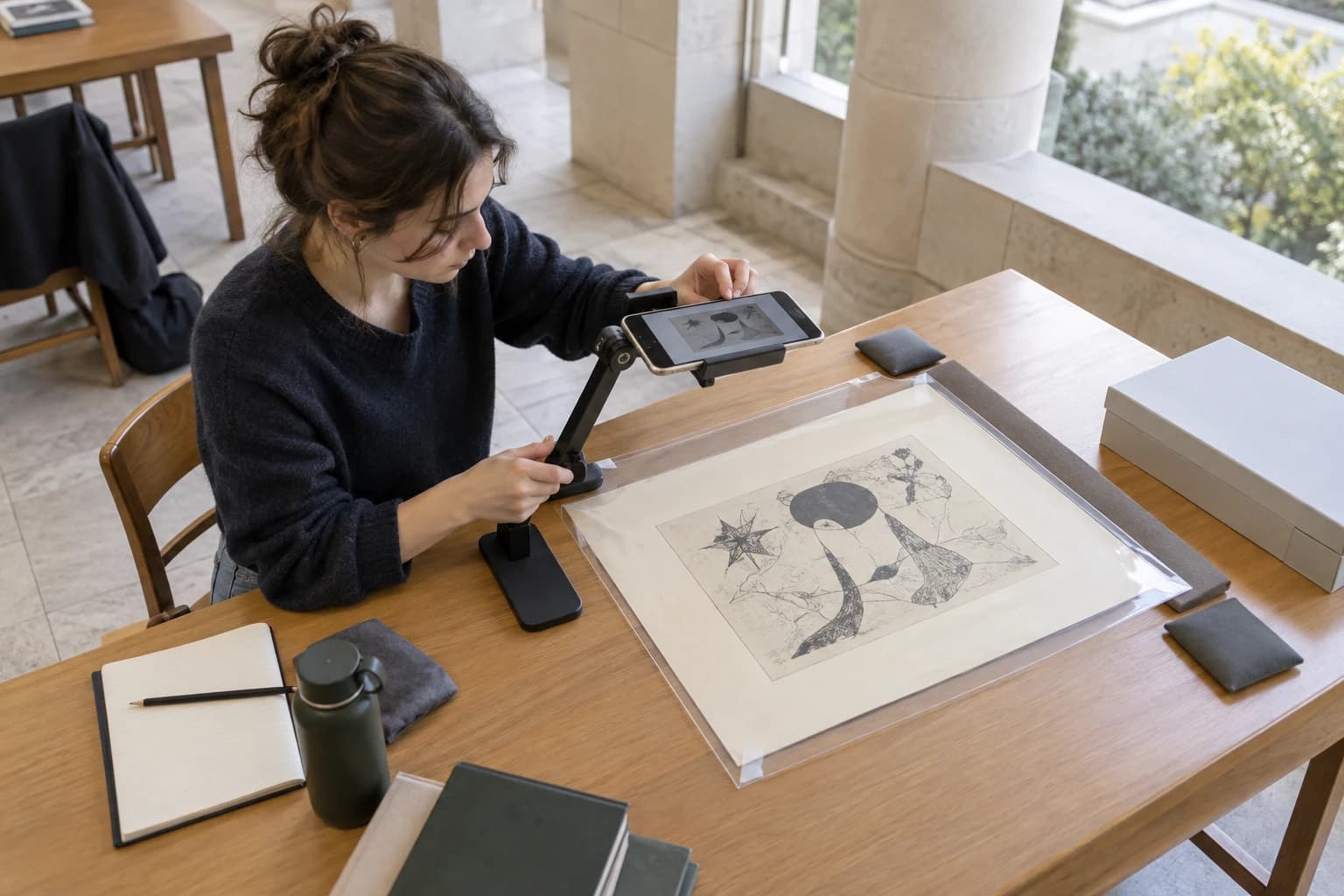
A useful photo includes the complete border, caption, speech bubbles, date, artist credit, and the instruction printed beside the image. A crop can remove the label that changes a character's identity or the year that changes the historical context. Keep the page flat, use even light, and take a second image if small print is unreadable. If the original is on a screen, an authorized screenshot may preserve more detail than a tilted phone photograph.
When you bring the image into Lirno, compare its reading with the source. Check proper names, punctuation in captions, dates, and which visual detail belongs to which figure. If a word or face is unclear, say so rather than silently filling it in. Ask a narrow first question: 'List only visible objects and any text you can read; flag uncertain areas.' Correct the input or rescan before using any explanation based on a mistaken transcription.
If the caption is missing, the interpretation is missing evidence. Capture it before asking what the image means.
3. Establish who made the source and when
Look for a publication date, cartoonist, newspaper or publisher, original title, and collection record. Not every worksheet supplies all five. State what is known and what remains unknown. A cartoon republished in a textbook today was made for a different audience at a different moment. Its original publication setting matters more than the date on a modern teaching handout. Do not treat a guessed era as a verified date.
The National Archives' cartoon analysis worksheet asks students to connect the image's message to evidence from the cartoon or knowledge about its creator. Use that principle to build a source note: 'According to the worksheet, this appeared in ...; the creator is ...; the missing information is ...'. If the source details are absent, consult the original archive or ask your teacher. An AI system cannot recover provenance that was never supplied to it.
4. Describe before you decode political cartoon symbols
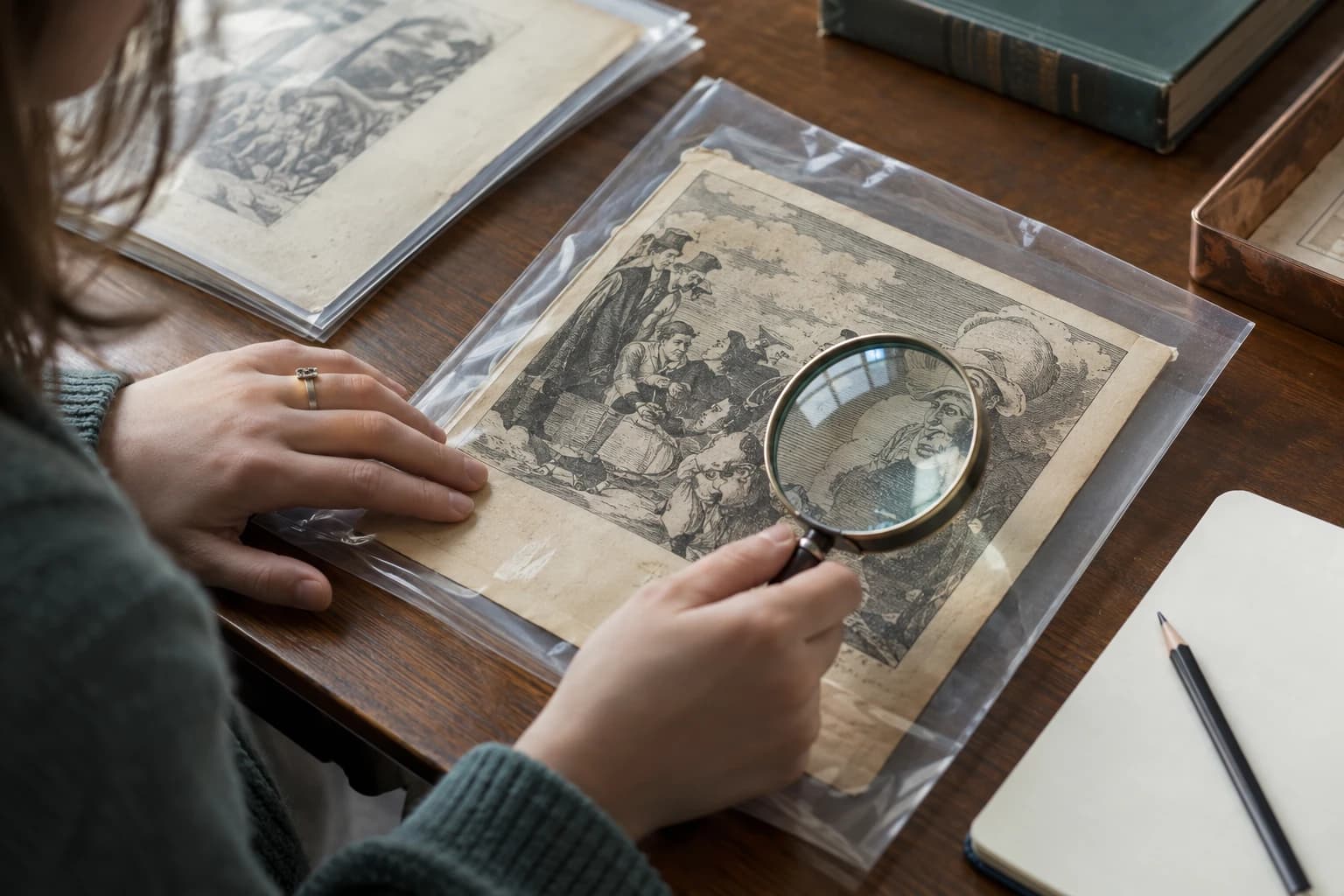
Make an observation list. Name objects, clothing, expressions, scale, gestures, labels, and the direction of movement. Say 'a figure is drawn much larger than the others' before saying 'the artist portrays this government as powerful'. The first sentence can be checked directly against the page; the second is an interpretation that needs the first as evidence. Ask what has been enlarged, simplified, contrasted, or placed in an unlikely situation.
Political cartoons often use exaggeration, analogy, irony, caricature, and juxtaposition. A symbol can mean different things in different periods, so avoid a universal symbol dictionary. A broken bridge may suggest a failed policy in one cartoon and a proposed rebuilding effort in another. Pair each proposed meaning with a precise visual detail and an alternative reading. If both readings seem possible, keep them open until context or a source note distinguishes them.
- What is literally drawn?
- Which detail receives the most emphasis?
- What interpretation could that detail support?
- What other reading is still plausible?
5. Ask an AI history homework helper a smaller question
Once you have a first observation, choose the kind of help you need. In Lirno, use Hint to get one question that points toward a feature you overlooked. Use Explain for an unfamiliar method such as visual irony or caricature. Use Check after you have drafted a claim and want to know whether you supported it with a visible detail. A full generated analysis at the start removes the very comparison that would let you catch the tool's mistake.
Try: 'I notice a large figure standing beside a much smaller group. Give me one question that helps me infer the artist's viewpoint without naming the figures or writing my paragraph.' Then return to the image and write your own answer. If the response claims to read a caption, verify every word on the original. If it supplies a historical event or identity, ask for the evidence and check it independently. A useful tutor makes your next observation sharper, not just your text longer.
Prompt for a question or an evidence check. Keep authorship of the final interpretation with you.
6. Separate observation, inference, and historical fact
Draw three columns on paper. In the first put a visible detail: 'one person carries an oversized bag'. In the second put a tentative inference: 'the bag may represent a burden'. In the third put a contextual claim that requires an outside source: 'the image criticizes a specific tax enacted that year'. The first comes from the artwork, the second is a reading, and the third needs confirmation from the cartoon's metadata, class notes, or a trustworthy historical reference.
This division stops a common chain reaction. If AI guesses that a figure is a named politician, every later paragraph may sound coherent while resting on an unsupported identification. Mark guesses with 'may' or 'suggests', not as established facts. Ask the tutor: 'Which sentence in my draft is an observation, which is an inference, and which needs a historical source?' Then inspect its classification yourself. Keep the first column independent of what the tool claims is visible.
7. Test the viewpoint against audience and context
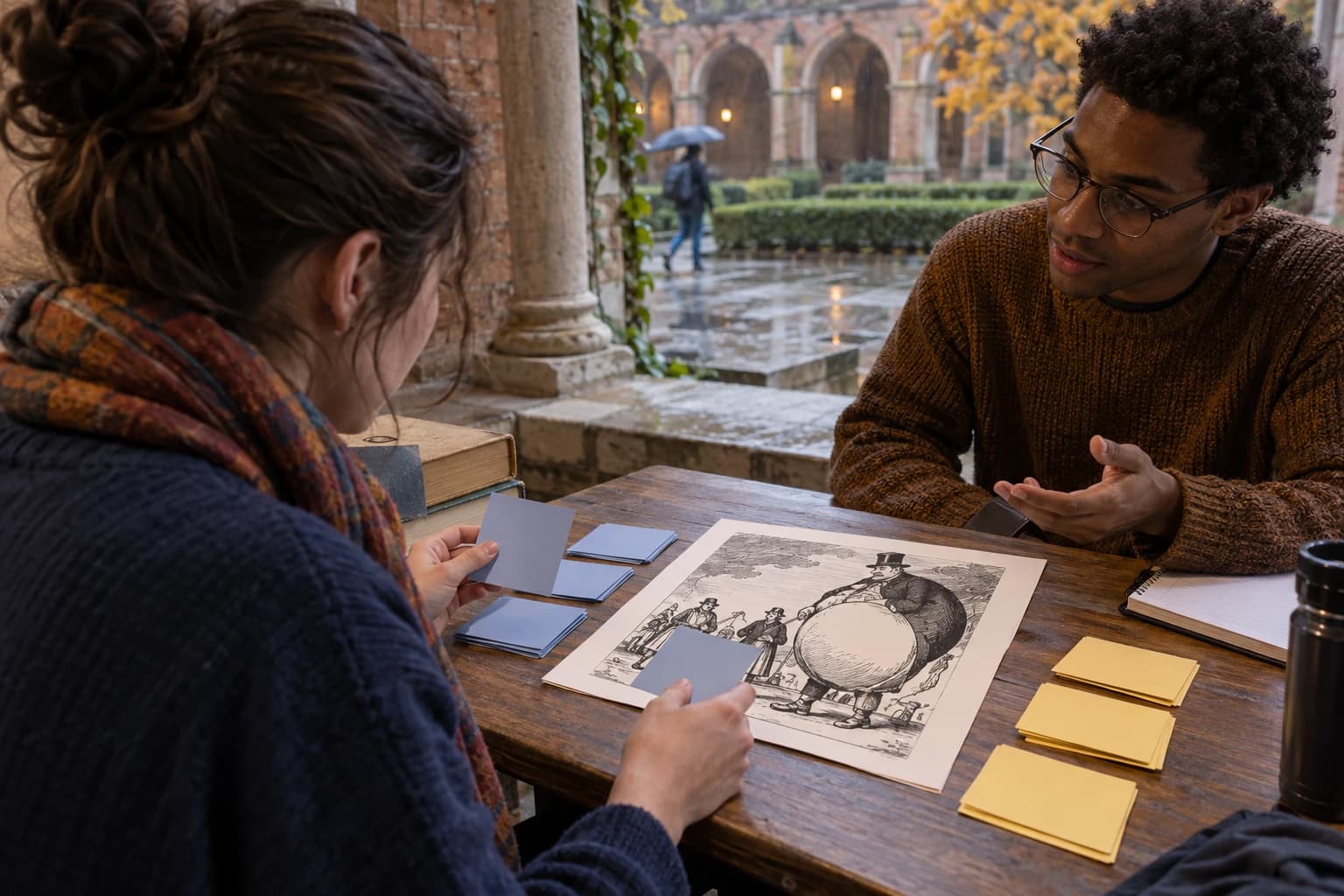
A political cartoon argues from somewhere. Ask whom it addresses, whose position it favors or criticizes, and what readers at the time might recognize that a modern reader might not. A cartoon published before an election may aim to persuade, while one printed after an event may frame a verdict. Neither setting makes every symbol obvious. Use the date and publication to constrain your interpretation rather than forcing the drawing to match a story you already know.
Cross-check two or three relevant facts in course materials or an archival description: what happened just before publication, what dispute was public, and which figure or institution the labels actually name. Distinguish what the cartoonist believed from what historians can establish. A satirical image is evidence of a viewpoint, not neutral proof that the depicted action occurred exactly as drawn. This is the critical step that turns a clever guess into historical analysis.
8. Write a claim with a visible detail and a reason
Build the paragraph in three moves. First state a limited claim about the cartoonist's possible message. Then describe a particular feature that supports it. Finally explain how that feature would communicate the message to the original audience in its historical context. For a hypothetical image you might write: 'The cartoon seems to question a policy's fairness. The artist draws one side carrying a much heavier load; this imbalance suggests who bears the cost.' This example is invented to show structure, not an answer to a real source.
Include provenance where the assignment requires it and choose verbs that fit your confidence. 'Depicts' belongs with visible evidence; 'suggests' belongs with interpretation; 'demonstrates' needs stronger support. Do not claim that all readers saw the same message. After drafting, use Check in Lirno to ask: 'Show me any interpretive claim that lacks a cited image detail or confirmed contextual fact. Do not rewrite my paragraph.' Decide yourself which suggested gap is real and revise only those sentences.
- Claim: a specific, cautious message
- Evidence: an exact visible feature
- Reasoning: how feature and context connect
- Limit: what the source cannot establish
9. Verify the interpretation without echoing the AI
Return to the actual image after every AI exchange. Does the claimed object exist? Is the figure on the left or right? Are the printed words exact? If you cannot see a detail, do not cite it. Compare names and dates with a reliable source and inspect whether an image found online is the original or a later reproduction. You can also ask a classmate to describe the image without telling them your interpretation; agreement on observation is more useful than shared confidence in a guessed message.
Our guide to analyzing a primary source offers a wider set of questions about creator, purpose, and limitations. Apply those questions here as a cross-check, not as a substitute for reading the picture. If the historical context remains uncertain, write that limitation honestly or ask a teacher. Lirno can misread text, overlook an image detail, or invent a plausible context. It does not certify a correct interpretation, a grade, or permission to use AI in your class.

10. Turn one cartoon into a new practice question
A finished paragraph does not prove that you can analyze the next image. Cover your notes and revisit the cartoon later. In two minutes, name two visible details, one possible message, and one contextual fact you would need to verify. Then compare your new explanation with the original. If you remember the prepared wording but cannot point to the evidence, practise that connection again rather than memorizing a model answer.
Turn your three-column notes into flashcards or a short quiz with Lirno. Ask 'What detail supports this inference?' or 'Which claim needs a source?' Keep answers hidden until you try. A different cartoon from the same period tests transfer better than repeating the same picture. Place one short review before the next history lesson.
11. Know when AI is not the right next step
Stop and seek human or primary-source help when the scan is illegible, the caption is missing, the cartoon contains harmful stereotypes needing careful classroom context, or the tutor changes its identification between replies. The same is true when your teacher has prohibited outside assistance for this assignment. Do not upload names, grades, or personal details that are irrelevant to the task. If an archival image has usage restrictions, follow those terms rather than assuming a worksheet makes it unrestricted.
For a defensible answer, the goal is not maximum certainty. It is a clear boundary between what you saw, what you inferred, and what you verified. Write the final paragraph in your own words and note genuine uncertainty. AI can support an observation or challenge an inference, but it cannot replace a source record, class instructions, or your judgment. That habit will serve you when the next cartoon uses a different style, period, or political argument.