Biology homework
Photosynthesis equation: where matter and energy go
Follow carbon, water, oxygen and light through the school-level equation, then check the atoms and explain what the shorthand leaves out.

A biology worksheet shows a leaf, sunlight and the line 6 CO₂ + 6 H₂O → C₆H₁₂O₆ + 6 O₂. It asks where the carbon in the sugar came from. If you memorise the symbols without following the atoms, it is easy to say “from the soil” because roots take up materials there. The carbon answer is actually the carbon dioxide entering from the air. The equation is useful precisely because it forces you to track what enters and what leaves.
This guide explains the photosynthesis equation as a model of matter and energy, not as a magic recipe in which light becomes food by itself. You will read the word and symbol forms, check atom counts, identify the limits of the simplified equation, and practise answering common questions. Paper, a pencil and a few counters are enough; any mention of Lirno is optional support after you try the task.
1. Read the photosynthesis equation as a story of inputs and outputs
The word equation is carbon dioxide + water + light energy → sugar + oxygen. In the usual school-level symbol equation, 6 CO₂ + 6 H₂O → C₆H₁₂O₆ + 6 O₂, with light written above the arrow or beside the reactants. Carbon dioxide and water supply matter; light supplies energy. The arrow means that the process leads from substances on the left to substances on the right. It does not mean the substances simply sit next to each other in a leaf and spontaneously change.
Say each formula aloud before attempting an explanation. CO₂ is one carbon and two oxygen atoms per molecule. H₂O is two hydrogen and one oxygen. C₆H₁₂O₆ is a convenient representation of a sugar, and O₂ is oxygen gas with two oxygen atoms per molecule. The large number in front multiplies the whole formula: six CO₂ molecules contain six carbon atoms and twelve oxygen atoms.
The equation summarizes a complex sequence of reactions rather than showing every intermediate step. OpenStax presents glucose as a familiar overall product while explaining that carbon fixation first produces smaller carbohydrates. For a worksheet, use the level of detail requested: a basic question may need the overall inputs and outputs; an advanced one may ask how the light-dependent reactions and carbon-fixation reactions connect.
2. Trace carbon from air into carbohydrate
In the simplified equation, all six carbon atoms in C₆H₁₂O₆ correspond to the six carbon atoms supplied by six CO₂ molecules. A plant may absorb minerals from soil, but soil minerals are not the carbon source represented by this reaction. Carbon dioxide enters many leaves through small pores called stomata. The plant uses that carbon to build organic molecules rather than pulling ready-made sugar out of the ground.
Try covering the right side and asking what product can contain the carbon from the left. Oxygen gas contains no carbon, so the carbon must be in the carbohydrate. That argument uses conservation of matter, not a memorised slogan. If a homework diagram has arrows from air and roots, label the air arrow carbon dioxide and the root arrow water, then explain how each contributes to the overall process.
Do not assume every bit of fixed carbon becomes one glucose molecule immediately. The equation is a balanced net model that lets you account for atoms. Plants use carbon compounds to build many substances, including other sugars and structural materials, and they also use some products in cellular respiration. If the question asks about biomass, connect the source of carbon to the carbon dioxide rather than claiming that sunlight supplies the mass.

3. Follow water and explain the oxygen release carefully
Water is another material input. Roots take up water and transport it to leaves, where it participates in photosynthesis. At the school level, six H₂O molecules on the left contribute twelve hydrogen atoms and six oxygen atoms to the balanced net equation. Keep this material role separate from light's energy role. A beam of light has no carbon, hydrogen or oxygen atoms to add to a sugar molecule.
A common question asks whether the oxygen gas released by plants comes from CO₂ or H₂O. The detailed light-dependent reactions split water, and the released O₂ comes from water. The short net equation alone does not prove that origin by simply matching an oxygen symbol on each side; atoms can be rearranged through many intermediates. Use the reaction mechanism or a reliable source when answering that more specific question.
Keep the scale of the claim sensible. A leaf can exchange gases, but the overall reaction is not a claim that every plant releases oxygen at every moment. Respiration also occurs, and rates vary with conditions. In a basic task, explain that photosynthesis releases oxygen when the light-driven process operates. In an experiment question, report what was actually measured instead of inferring the exact rate from a diagram.
4. Explain what light does without calling it an atom
Light is an energy input, not a chemical ingredient with atoms to balance. Chlorophyll and other pigments absorb light in chloroplasts. In the light-dependent stages, some of that energy becomes chemical energy carried by temporary molecules; those carriers help drive carbon fixation. The overall equation shows that energy is required to build energy-rich organic molecules from carbon dioxide and water.
A useful homework sentence is: “Light energy helps the plant build carbohydrate from CO₂ and water; it does not supply the carbon atoms.” This separates energy flow from matter flow. If a teacher asks where the stored energy in food comes from, the answer points to sunlight captured through photosynthesis. If the teacher asks where the mass of the food comes from, follow carbon and other atoms in the material inputs.
Avoid saying that plants get “food” from sunlight alone. Light cannot replace water or carbon dioxide, and a dark leaf cannot run the light-dependent part as it does in sunlight. Equally, the phrase “light-independent reactions” does not mean they never depend on light in the living plant; they use products made by light-dependent reactions. Use the terms at the depth your course expects.
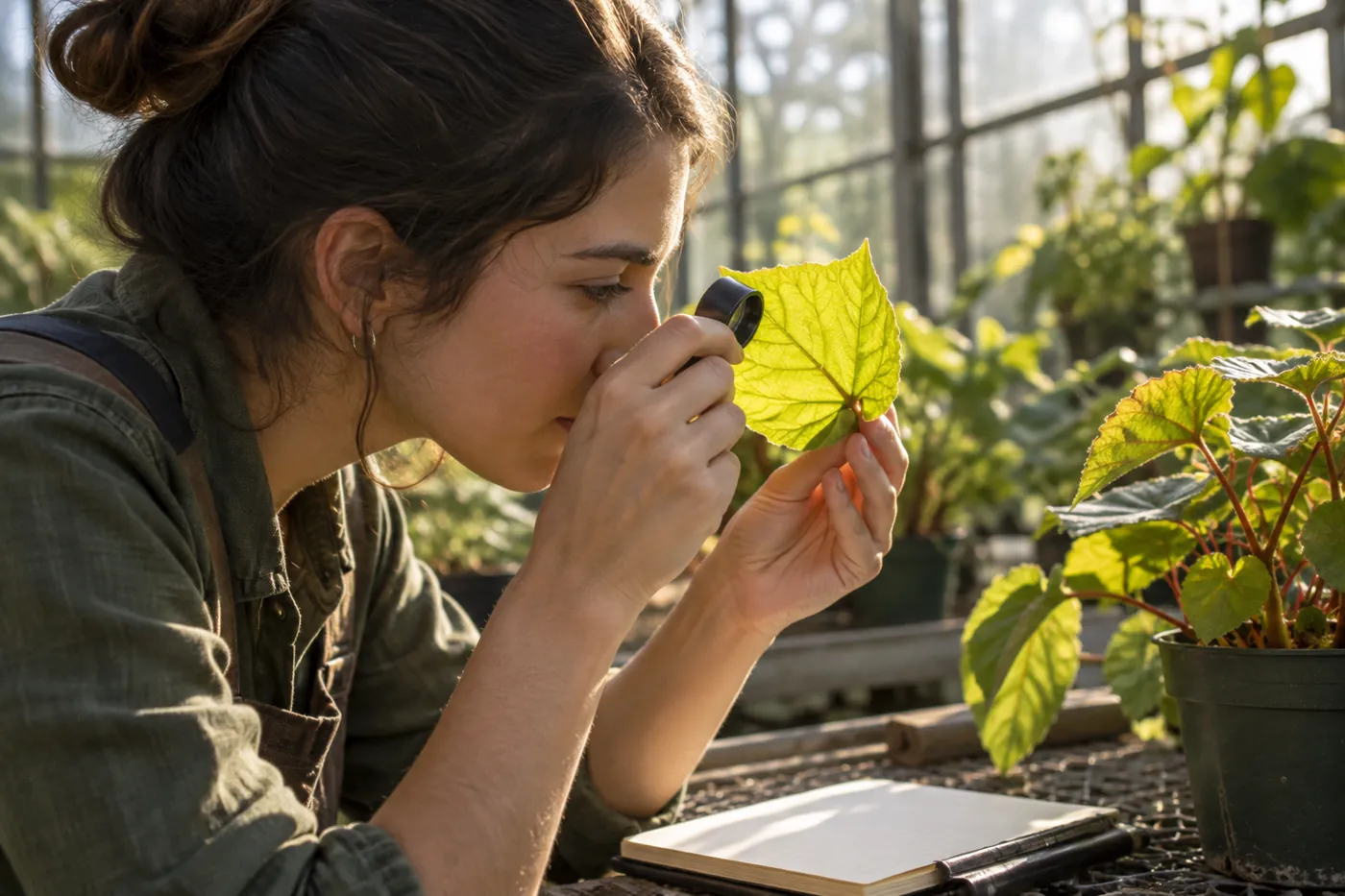
5. Check the balanced formula atom by atom
Count the left side: six CO₂ provide 6 carbon and 12 oxygen atoms; six H₂O provide 12 hydrogen and 6 oxygen atoms. The totals are 6 carbon, 12 hydrogen and 18 oxygen. Count the right side: C₆H₁₂O₆ has 6 carbon, 12 hydrogen and 6 oxygen; six O₂ add 12 oxygen. Both sides therefore contain 6 carbon, 12 hydrogen and 18 oxygen atoms.
The subscript belongs to the symbol immediately before it, while a coefficient multiplies every atom in the formula after it. Changing O₂ to O₆ to force a count would change the substance, not balance the equation. Write the totals in three rows—C, H and O—if the notation feels crowded. The same atom-counting skill applies to other reaction equations, so this practice is useful beyond biology.
Balancing does not explain the full pathway. It checks conservation of atoms in a net statement. A student can count perfectly yet still misunderstand where the gas enters or why light is needed. After checking the arithmetic, write one sentence about the role of each input and output. That links a chemical equation to a biological process instead of treating it as a pattern of numbers.
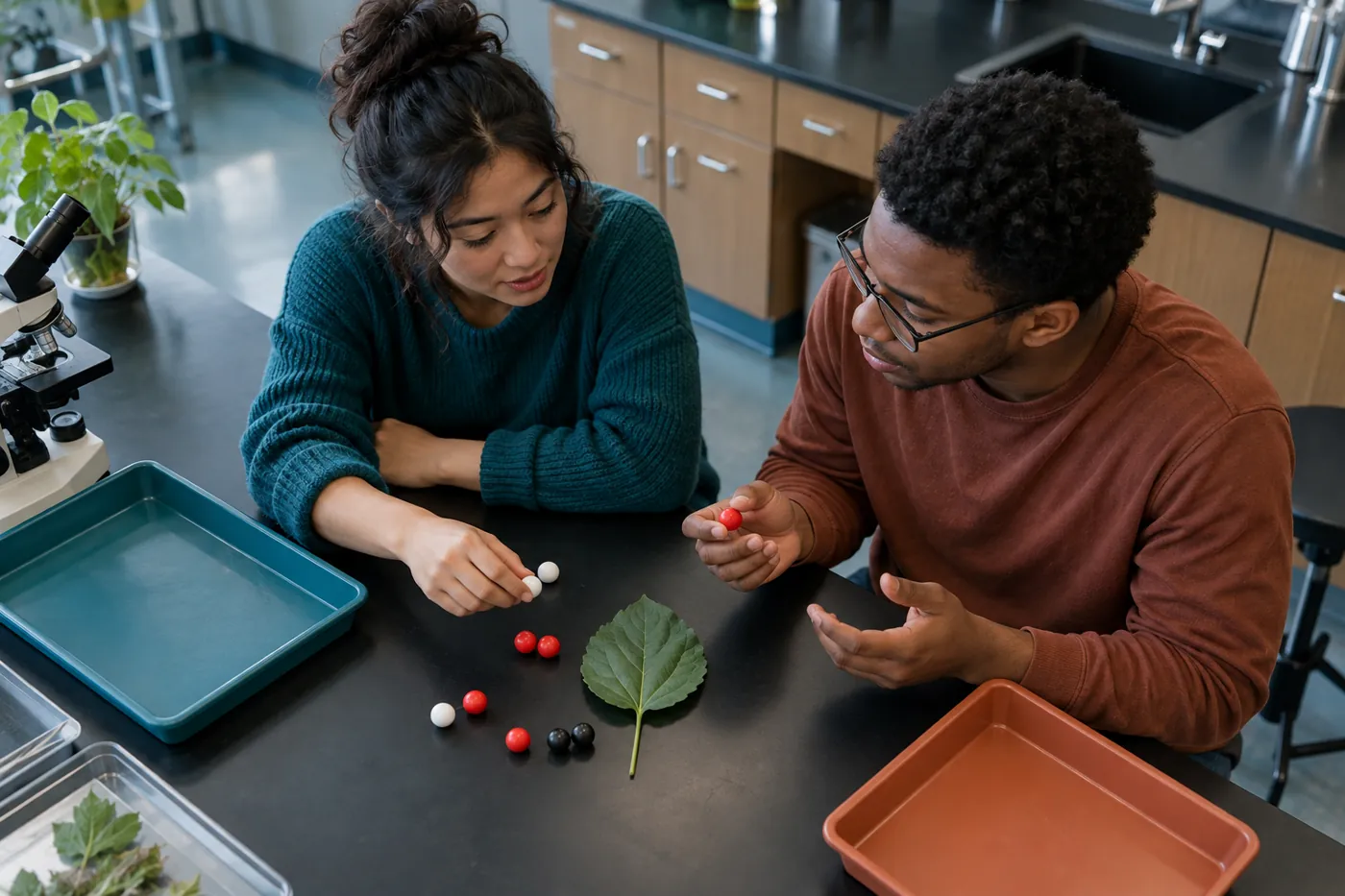
6. Place the process in a leaf without overstating the diagram
Many school diagrams show roots taking up water, stomata admitting carbon dioxide, chloroplasts receiving light and oxygen leaving the leaf. Use each arrow to answer a specific question. Roots are a water route, not a sugar factory. Stomata are openings for gas exchange, not the place where all of the chemistry happens. Chloroplasts are the organelles in which photosynthesis occurs in plant cells.
When labelling a diagram, write the direction of movement in words. “CO₂ from air into leaf” and “O₂ from leaf to air” are less ambiguous than two unlabeled arrows. For water, distinguish uptake at roots from movement into cells. If the task supplies an experiment with aquatic plants or gas bubbles, describe the observation first and only then connect it to the equation.
7. Separate photosynthesis from cellular respiration
Photosynthesis stores some incoming light energy in organic molecules; cellular respiration releases usable energy from organic molecules for cell activities. The school equations are often shown as near reverses, but the processes are not the same reaction played backward. They involve different pathways, locations and conditions. Plants carry out respiration as well as photosynthesis, so “plants only make oxygen” is an incomplete statement.
In a comparison table, use columns for purpose, inputs, outputs and energy direction. For photosynthesis, include carbon dioxide and water as net inputs, sugar and oxygen as net outputs, and light as energy input. For aerobic respiration, the school summary uses sugar and oxygen as inputs and carbon dioxide and water as outputs while energy becomes available to the cell. State the level of simplification you are using.
If a question asks what happens in darkness, do not say the plant immediately stops all metabolism. Light-dependent photosynthesis cannot proceed without light, but respiration continues. The balance of gas exchange can change. An experiment may be designed to detect that change, yet its result depends on species, light level and measurement setup. Base your answer on the information given.
8. Use the equation to answer a new homework question
Suppose a task asks why a seedling gains mass while growing in soil. First name the model's carbon source: CO₂ from the air. Then say that photosynthesis incorporates carbon into organic matter using water and light energy. Do not claim that the equation alone explains every gram of mass, because water, minerals and other processes also matter. The equation supports a focused carbon explanation.
If the task asks why six oxygen molecules appear on the right, count oxygen atoms and check the net formula. If it asks where released oxygen originated, use the water-splitting mechanism rather than the tally alone. These are different questions. Underline the verb—balance, explain, compare, predict or evaluate—before writing. A correct calculation can still be an incomplete answer to a mechanism question.
For a prediction, change one condition at a time. Less light may limit a light-dependent process, but the effect on a measured rate is not always a simple straight line; other factors may become limiting. If the worksheet presents data, interpret those data rather than promising that doubling light doubles photosynthesis. Show what the equation can explain and where an observation is needed.
9. Check your understanding with a short retrieval task
Close the page and reconstruct the word equation from memory. Then write the balanced symbol form and count C, H and O on both sides. Draw four arrows: CO₂ in, water in, light energy in and O₂ out. Add a fifth arrow for organic matter made by the plant. If one arrow is uncertain, return to the relevant paragraph and try again without looking.
Create two questions that require reasoning: “Why is sunlight not the carbon source?” and “Why can't the net equation alone show which reactant supplied the released oxygen?” Answer in complete sentences, then compare with the material. This tests more than repeating the formula. A peer can ask which part of the answer is an observation, an atom count or an explanation of the process.
For free biology homework help, start with your notes, an open textbook and a self-made quiz. Lirno is free to download and start if your school allows it, although some AI usage levels or advanced features may require Premium. You may ask for a hint or a check after an attempt. Verify any AI claim against the worksheet and source: it can misread or reason incorrectly and cannot guarantee grades or permission.