Essay writing
Essay outline from a prompt: keep your own argument
Turn an assignment prompt into a question, provisional claim, evidence plan, and first draft without asking AI to write the essay for you.

The assignment says, “Should a university restrict single-use packaging in its cafés? Take a position and use evidence.” Your notes contain possible points about convenience, waste, cost, and accessibility, but none yet forms an essay. If you start drafting immediately, each paragraph may answer a different question. An outline should make the argument visible before prose makes it harder to move.
This guide begins with the actual prompt, turns it into a manageable question, and places claims beside evidence and possible objections. You can do every step with paper. If your course permits AI planning help, Lirno can capture the complete task and give a hint or check; the position, source judgments, and final sentences remain yours. No tool can decide what your instructor permits or guarantee that an argument is sound.
1. Decode the assignment before choosing a thesis
Underline the task verb, topic, limits, and required evidence. “Take a position” calls for an arguable claim, not a neutral list of advantages and disadvantages. “Use evidence” means you must support reasons with material the assignment allows. “In its cafés” narrows the question to a campus setting. If the prompt specifies length, citation style, source type, or deadline, put those constraints on the same page as the outline.
Rewrite the question in your own words: “Would restricting single-use packaging in campus cafés be justified, and under what conditions?” That phrasing leaves room for a qualified answer. Do not silently change the task into a broader essay on all plastic pollution, or a report that only describes recycling. A useful outline shows how every main section contributes to the exact question asked.
Before researching, list what you know and what you need to check. You may know the proposed policy, but you cannot invent campus waste numbers or assume every alternative has lower environmental impact. Mark uncertain statements with a question mark. The Purdue OWL's outlining guidance starts with a thesis and organization; the key is to make the connection between each section and the paper's purpose explicit.
2. Draft a position that can be revised
Write a provisional answer to the prompt in one or two sentences. For the campus example, you might argue for a restriction only if the university provides accessible reusable or low-waste options and measures effects on students and staff. That is a possible line of reasoning, not a claim that the policy has already worked anywhere. Your real evidence may eventually support a different position.
A thesis is more useful than a topic label. “Single-use packaging on campus” tells a reader the subject but not what you will defend. “The university should restrict single-use packaging in cafés if it provides practical alternatives and evaluates the cost” states a position with conditions. Keep it narrow enough for the assigned length. You can revise it after reading sources; an outline is a working model, not a contract.
Test the thesis with two questions. Could an informed reader reasonably disagree? Can the available evidence support each important part? If the answer to either is no, narrow or qualify it. A claim about all universities and all materials would be hard to establish in a short assignment. A claim about this proposed campus policy is more manageable, provided the sources actually address it.
3. Give each body paragraph a distinct job
List the reasons that could support your thesis, then group overlapping ideas. One paragraph might explain the specific problem the policy aims to address; another could evaluate alternatives; a third could examine implementation and access. These are functions, not fixed headings you must copy. If two paragraphs make the same point in different words, combine them or give one a genuinely different role.
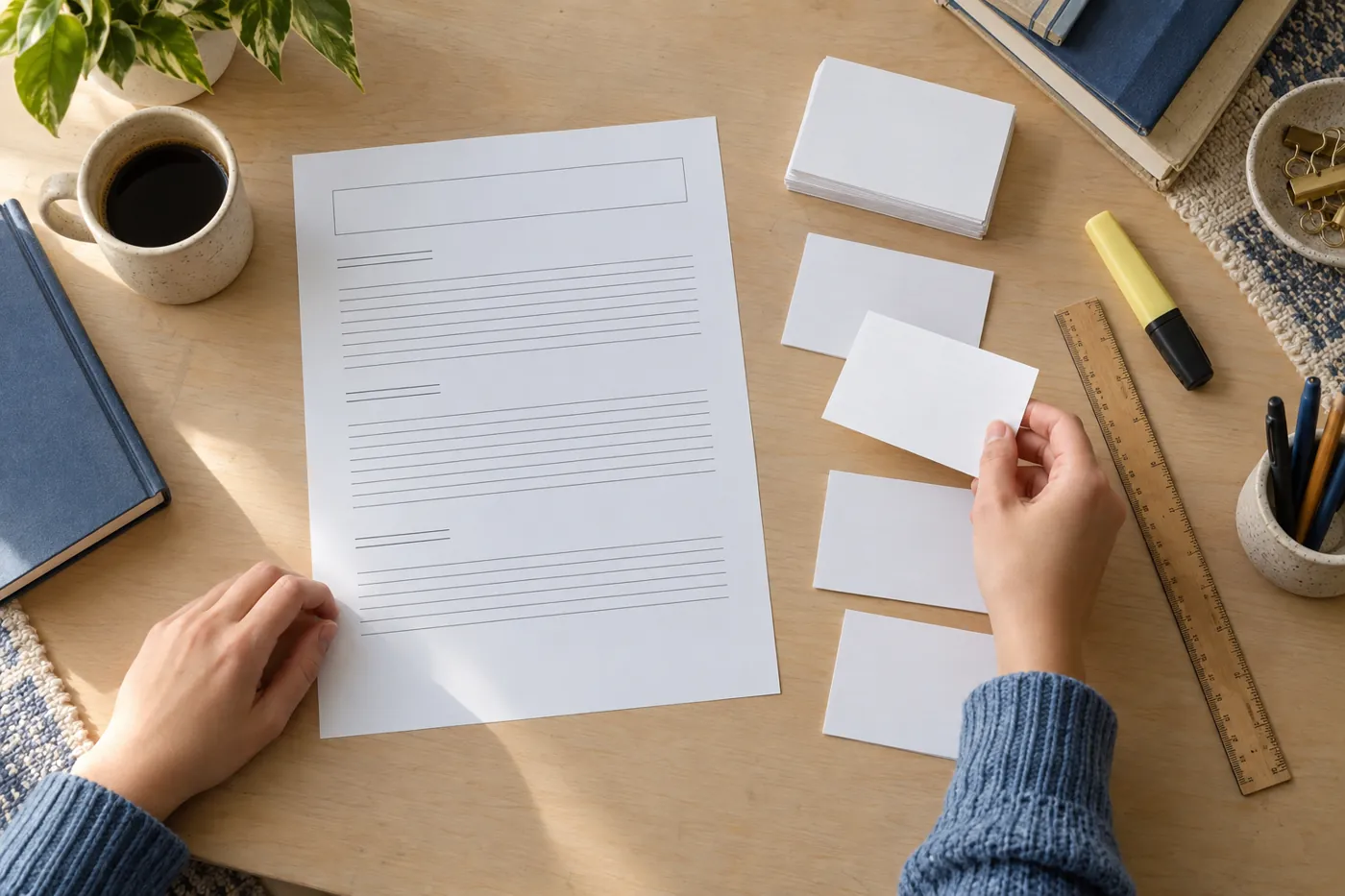
For each planned paragraph, write a small card with a claim, expected evidence, and a line explaining why that evidence matters. A card reading only “waste” is too vague. “Compare the current packaging stream with the proposed alternative, using a campus or credible lifecycle source” tells you what to seek and what relationship to explain. Leave a blank where evidence is missing instead of filling it with a made-up statistic.
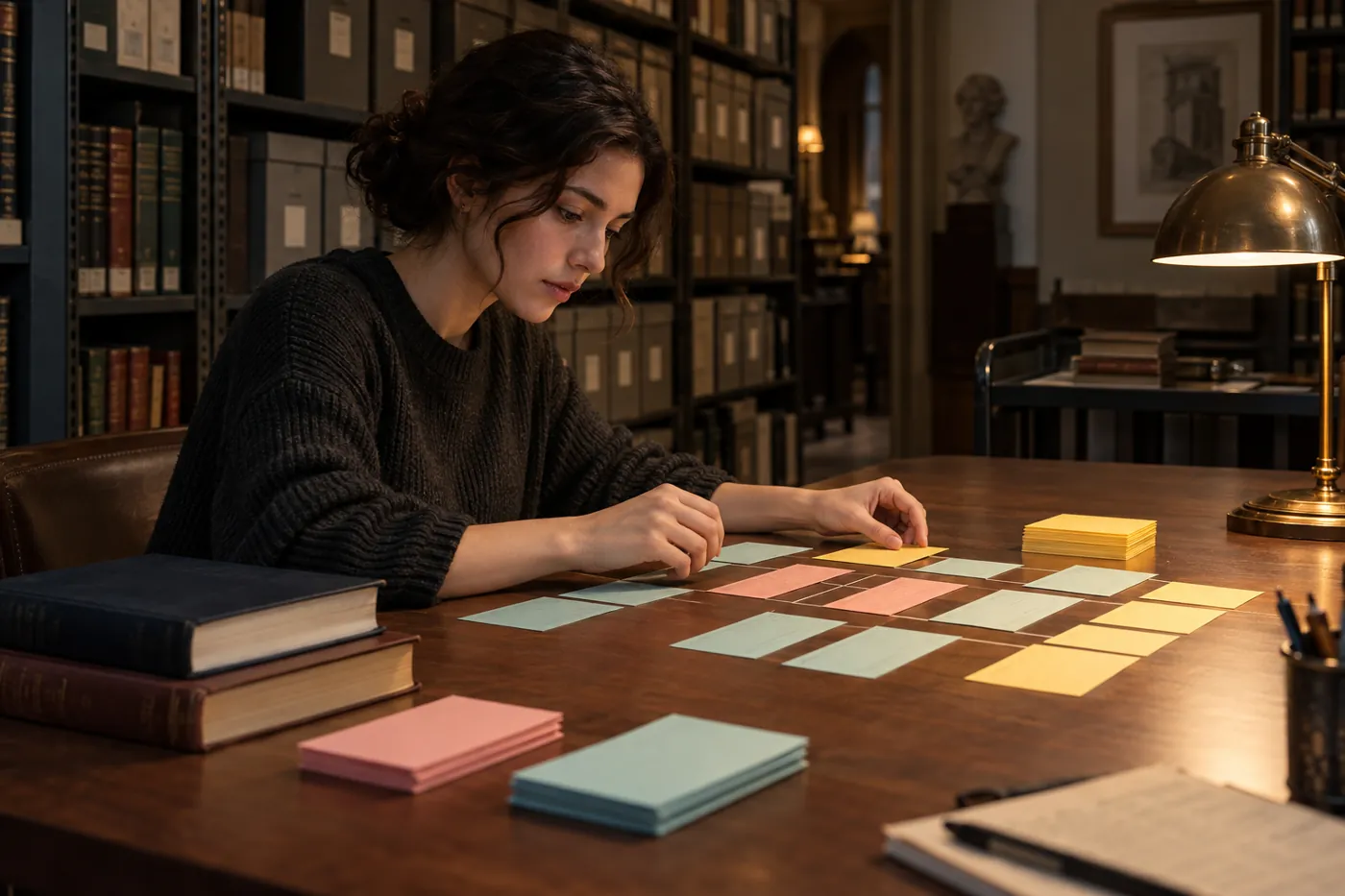
Arrange the cards so a reader can follow the reasoning. You may start with the problem and then test solutions, or begin with the most direct reason and address practical constraints later. The order should help the thesis unfold rather than merely follow the order in which ideas occurred to you. Read the claims alone; together they should form a coherent answer to the assignment.
4. Separate evidence, explanation, and source information
Evidence is not an ornament added after a paragraph is written. Beside each claim, note what kind of support would make it credible: a policy document, a measured campus figure, a relevant study, or an interview if the assignment permits one. Record the exact source and page or section while reading. Then add a sentence explaining how that evidence supports the claim rather than expecting a quotation to speak for itself.
Use a three-column check: claim, evidence, reasoning. If the evidence column is empty, research is needed. If the reasoning column is empty, the reader may not see why the source matters. If a source actually contradicts your provisional thesis, do not hide it. Adjust the claim or explain the limitation. An outline makes that correction cheaper than a complete draft does.
Distinguish facts from assumptions. A statement like “all students prefer reusable containers” would need strong evidence and is unlikely to hold without qualification. You can instead identify a question: what alternatives work for commuters, disabled students, and people with limited time? That inquiry can shape the evidence search. Keep track of citations according to the course's instructions rather than trusting a generated reference.
5. Add a fair objection and a response
An argumentative essay becomes more credible when it addresses a serious concern. For the example, an objection could be that a restriction adds cost or inconvenience for some users. State the concern accurately rather than inventing a weak opponent. Then ask what evidence would help evaluate it: actual costs, accessibility requirements, or the details of a proposed phase-in. The response may qualify your thesis instead of dismissing the concern.
Place the objection where it helps the reader. Some outlines put it before the final supporting reason; others discuss it after the main case. What matters is that the response connects back to the thesis and does not open a second, unrelated essay. If you cannot answer the objection with current sources, note that gap as a research task. An honest limitation is better than a confident sentence unsupported by evidence.
A balanced paragraph need not pretend both sides are equally supported. It should show that you understood a plausible alternative and tested your own claim against it. The outline can mark “objection,” “evidence for objection,” “response,” and “remaining limit.” This simple structure prevents a last-minute token counterargument that changes nothing in the essay.

6. Capture the whole prompt if you request a Lirno hint
If AI assistance is allowed, capture the complete assignment in Lirno: the question, source rules, length, and any rubric. A cropped image with only the topic can lead to advice that ignores a requirement. Before asking anything, compare the scan with the page. Check negatives, word limits, citation rules, and whether the task says “argue,” “compare,” or “analyze.” Correct a misread line yourself.
Choose the kind of help that matches your stage. If you cannot identify the task, ask for a hint about the prompt verbs. If you have a provisional thesis, ask whether each planned paragraph supports it. If your outline is complete, ask for a check of missing evidence or repeated claims. Make a new attempt after the hint. Do not ask the app to produce a submission-ready essay and call it your own work.
AI may misread a rubric, invent a citation, or present a weak argument as persuasive. Lirno cannot guarantee correctness, grades, or permission to use AI in this assignment. Follow your school's rules and verify source details directly. A photograph gives the app context, not authority over the instructor's instructions or the quality of your evidence.
7. Check the outline against the prompt, not against polish
Read the original task again and trace a line from every required element to a place in the outline. Does the thesis answer the exact question? Is there evidence planned for each main claim? Have you dealt with a serious objection if the assignment calls for argument? Is the proposed conclusion more than a repetition? A tidy-looking plan can still fail if it never addresses the required scope.
Read the outline aloud as a chain of one-sentence claims. If the sequence feels like separate mini-essays, add transitions in thought: why does the next point follow? You may discover that a paragraph belongs earlier or that two cards belong together. Move them now, before the prose makes reordering feel expensive. A peer can ask what each paragraph contributes without writing it for you.
Keep a small list of unresolved questions beside the plan. Do not let an AI-generated answer hide a source gap. If the policy's effects are unknown, say you need evidence; if the prompt asks for a local example, find one in allowed materials. The outline is ready for drafting when you can explain the route from question to answer and identify what every source is doing.
8. Turn the outline into a first draft and a practice check
Draft a body paragraph from one card before writing a polished introduction. State its claim, present the verified evidence, and explain the connection to the thesis in your own words. Then move to the next card. The introduction can be adjusted once the argument exists. This order reduces the temptation to promise more in the opening than the evidence can support.
After a paragraph, cover the plan and summarize its role aloud: “This section tests whether the proposed alternative is workable.” If you cannot say how it advances the thesis, revise the paragraph or the plan. Check citation details as you draft. A source mentioned in notes may be relevant but still not support the exact sentence you wrote. Do not fabricate missing support to keep the outline symmetrical.
For a final learning step, make a blank version of the plan and reconstruct the thesis, reasons, evidence types and objection without looking. You can use Lirno, if permitted, to turn your own mistakes into a short practice prompt or ask for a check after drafting. The final argument, citations and wording remain your responsibility; a clear outline is a tool for thinking, not a substitute for it.