Planning

How to plan homework and due dates without the Sunday spiral

Use Lirno’s homework inbox, today-first focus, and missions to keep assignments visible and actionable.
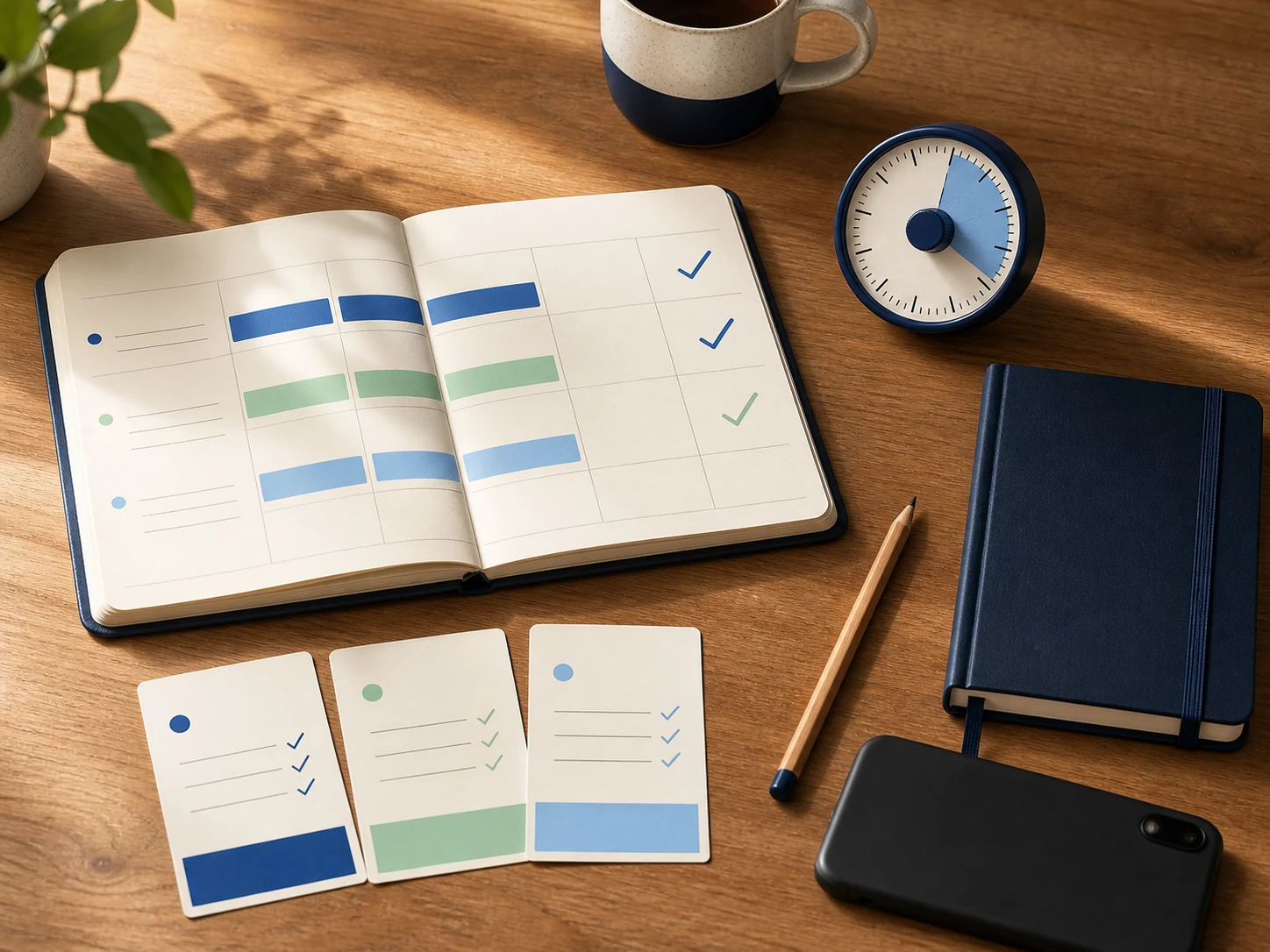
Homework planner with assignment cards and a focus timer

The quick read

What to take into your next study session

  • Capture assignments when you get them
  • Due today or tomorrow
  • Needs explanation before you can finish
  • Needs practice before a quiz

Most homework stress is not only difficulty—it is invisibility. When due dates live in five places, everything feels urgent and nothing gets started.

Lirno’s planner keeps assignments, tutoring, and practice in one study day so “what is due” connects to “what to do next.”

A planning lab

Turn due dates into visible starts and finish lines.

A calendar full of subject names still leaves the student to decide what “work on history” means. Translate each assignment into the next observable output: choose sources, outline three claims, solve questions 1–5, or review ten vocabulary cards without notes.

Protect fixed deadlines first, then estimate a focus block that fits the available evening. Large assignments need more than one start, while small urgent tasks should not consume the block reserved for work that cannot be completed later.

01

Capture every fixed date

Include submission time, assessment date, and any intermediate requirement that changes the order of work.

02

Define the next output

Replace vague labels with an action that can visibly be started and completed in one session.

03

Choose a realistic block

Use 15, 25, or 50 minutes based on task depth, energy, and the interruptions you actually expect.

04

Leave a restart note

Record the next question or unfinished step so tomorrow begins without rebuilding the entire context.

Try: rewrite one large assignment as three outputs that each fit inside a single focus block.
Checkpoint

A useful plan makes the next start obvious and protects the deadline. It does not require every hour of the week to go perfectly.

Make the guide useful after tonight

Return to the skill at the moment memory has to do the work.

Reading a guide can create familiarity without changing what happens on the next assignment. Apply one idea immediately, then schedule a short return with the original explanation closed. Use the result—not the amount of time spent—to decide what happens next.

NOW

Apply one move

Use the guide on a real question, worksheet, deadline, or draft already in front of you. Keep the scope small enough to finish.

TOMORROW

Retrieve without the guide

Recreate the setup, checklist, explanation, or next action from memory before reopening the article or tutor response.

NEXT TASK

Transfer the habit

Use the same decision on a different problem or assignment and note what had to change for the new context.

If the move still needs the article open, reduce it to one cue and one attempt. A smaller habit that survives is more useful than a complete workflow that is never repeated.

Capture assignments when you get them

Add the task, subject, and due date as soon as it appears. Waiting until the night before forces guessing and rushed scanning.

If the handout is long, attach the important page through scan or notes so you do not have to rediscover it later.

Start with today first

Sort by what is due soonest and what needs a deep understanding loop. Quick submissions and multi-day projects should not fight for the same attention without a plan.

  • Due today or tomorrow
  • Needs explanation before you can finish
  • Needs practice before a quiz
  • Can wait but should not disappear

Turn heavy tasks into missions

When an assignment is more than a checkbox, open a mission. Understanding and practice become part of the plan instead of leftover hope at midnight.

A mission is useful when finishing the page is not the same as being ready for class.

Protect focus time

Use a focus session for the block where you actually work. Notifications and tab-hopping destroy more homework nights than hard problems do.

Keep the work yours

Use AI to reveal the method, then close the help and try it again.

Check important details against class materials, follow your school’s AI policy, and keep one no-notes step at the end of every session.

See the Lirno learning loop →

Your next problem, with a clearer path

Ready to get unstuck?

Scan homework, ask Lirno Tutor, and practice until the idea sticks.

Good to know

Questions about this guide

Can parents use the planner too?

Lirno is student-first, but parents can help establish a capture habit and review what is due. The learning work still belongs to the student.

What if due dates change?

Update the assignment as soon as you know. A planner only helps if it reflects the real calendar.

Does planning require Premium?

Core planning habits work with the app’s homework workflow. Some AI-heavy follow-ups or higher limits may require Premium, which the app will show clearly.